
Development of Valentines Estate into Park
By David Lane©
Valentines Park is a Grade II listed Park and Garden.
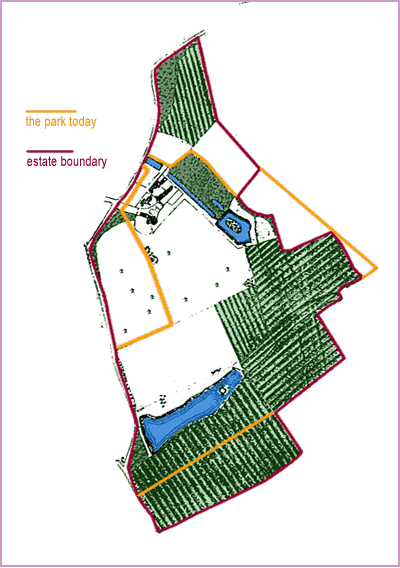
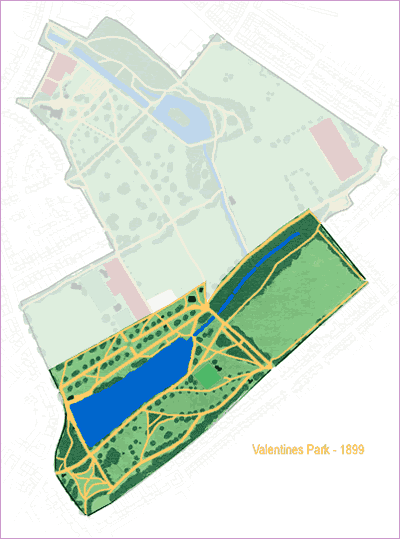
The following maps show how the park developed, although this obviously took place at the same time as Ilford was growing.
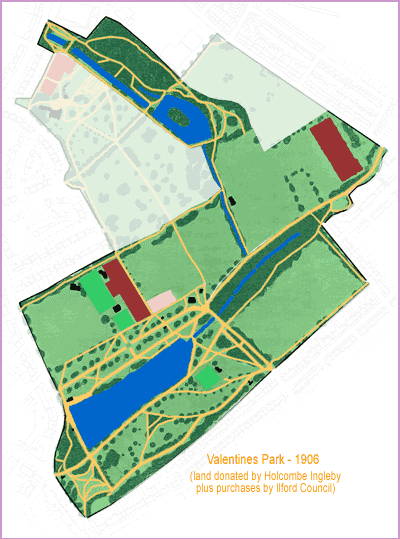
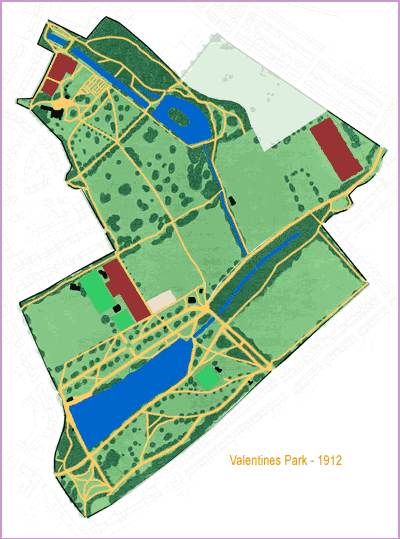
Learn more about the developments after Mrs Ingelby’s death, that led to what is today Valentines Park from these articles written by Nigel Burch for the Friends’ newsletters
The Ilford Garden Suburb
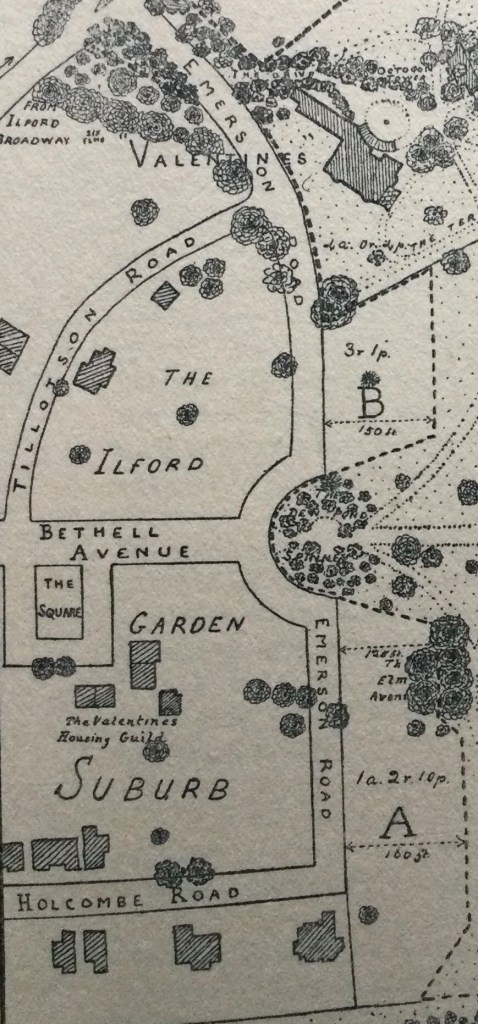
With neighbouring Cranbrook Hall demolished and almost that entire estate built on by builder William Griggs, there had been real concern at the “advance of bricks and mortar” and worries that the rural nature of Ilford could be lost forever. Ilford’s inhabitants would no longer have access to healthy fresh air and a place of beauty to exercise.
By 1912, the council had been able to use these funds along with donations from the public, to acquire the mansion and rest of the gardens surrounding it. Fortunately due to this investment, as well as foresight and campaigning, led in great part by a local doctor, Dr Victor Jenner Batteson, the Valentines estate with its house was preserved, since when it has developed beyond all imagination.
You can read more here about the creation of the Ilford Garden Suburb in an article by Dr Colin Runeckles of the Ilford Historical Society.
Bishops Walk
By Georgina Green
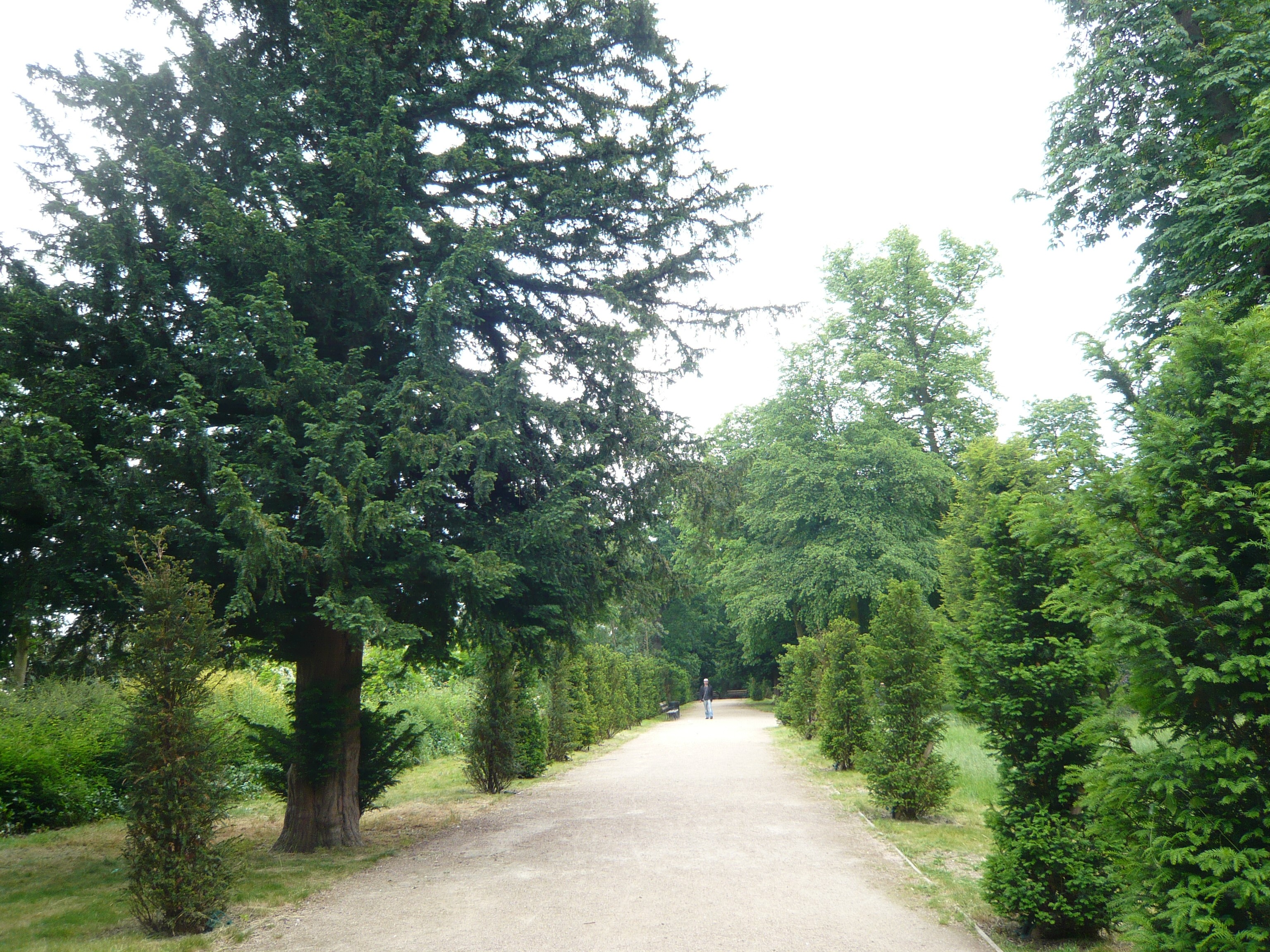
If you walk in the garden around the far side of the long canal you will notice an avenue of Norway Maples which includes two old yew trees. The maples were planted in 1971 to replace an old avenue of yews, possibly dating back to the time that Valentines was rebuilt for Elizabeth Tillotson. They are known as the Bishops Walk – but why?
One of the explanations involves Bishop Thomas Ken who is said to have been a friend of the Finch family and to have stayed at Valentines after the trial of the Seven Bishops in 1688.It is said he used the yew walk for his meditations. Read the full article here
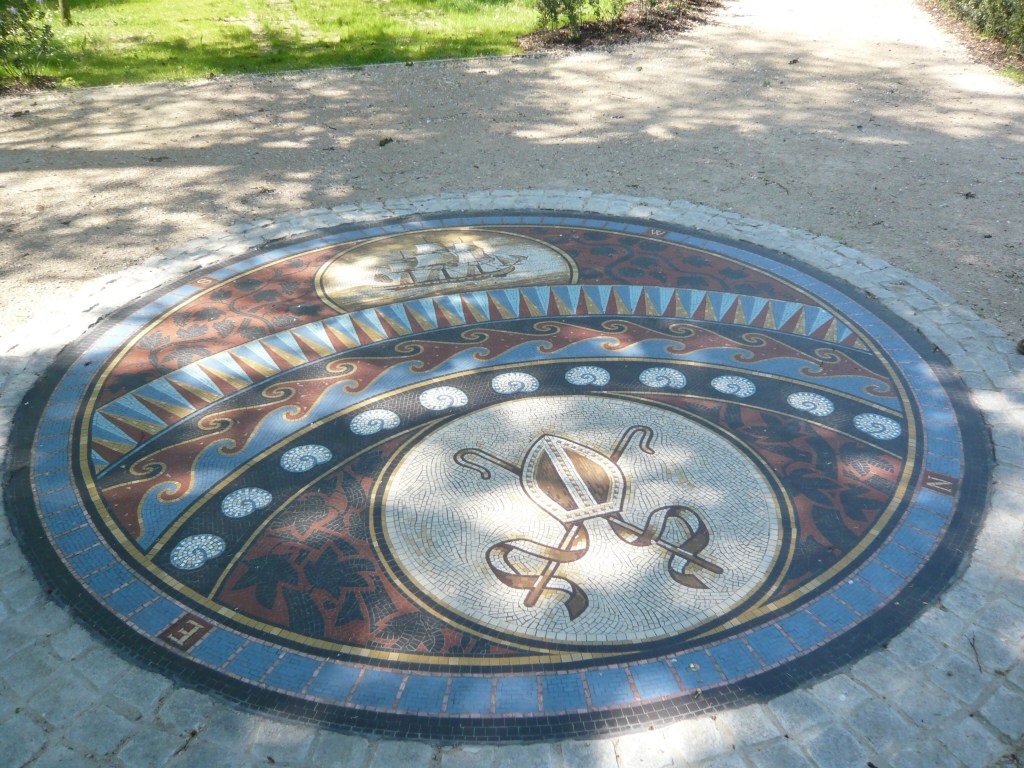
The Mosaic was created by Gary Drostle as part of the restoration in 2008.
Many individuals, groups and organisations have been and are still involved with Valentines Mansion, Gardens and Park. Find out here about the Valentines Park Conservationists
The Magnolia at Valentines
by Georgina Green

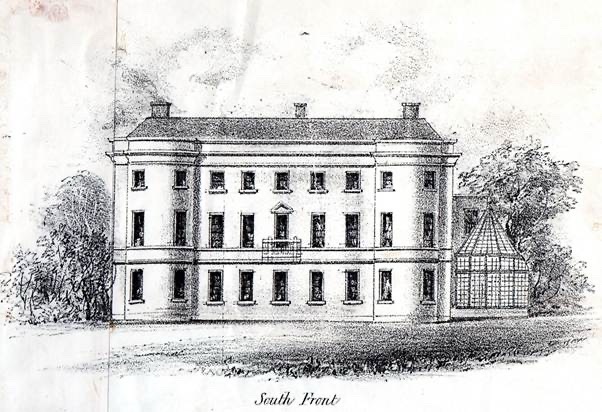
In the Valentines Park Conservationists Newsletter no.13, November 2002, you will find a paragraph about the Magnolia Grandiflora which grows against the south front of the mansion. It says “We do not know when this tree was planted, but the magnolia was another late 17th century introduction from North America, where it reaches a height of 65 feet or more.”
In the summer of 2003 , local historian Georgina Green spent a few days in Exeter trying to discover more about Sir Charles Raymond’s origins. She put a few more twigs onto his family tree and explored the area where he had lived as a child. Her research led her to wonder if Charles Raymond saw a magnolia when he returned to Exeter at some time and planted one at Valentines. We know he kept in touch with Exeter because on 8 August 1774 he was made a Freeman of the City. However , she concluded “ I don’t think our magnolia is old enough to have been planted by Sir Charles Raymond, but it is an interesting coincidence.”
Further research by Georgina indicated the magnolia was not planted by Sir Charles Raymond as (although substantial by 1884 ) it does not appear in drawings of the Mansion until after 1838. Read full article here.
Camellias at Valentines
by Georgina Green

One of the particular interests of local historian Georgina Green is those people who imported plants into this country in the 18th century. Her research has confirmed that one of the first varieties of double camellias in this country was seen at Valentines in 1792 . It was first thought it was imported by Sir Charles Raymond but her research shows it was introduced after his death while Valentines was the home of Donald Cameron, Raymond’s friend and business associate. A camellia of the nearest variety has been planted in the kitchen garden. Read the full article here.
The Black Hamburgh Vine
by Georgina Green
Take a stroll in the walled garden at Valentines and you will see a vine which was planted in 2008 in the kitchen garden. This vine came not from a local garden centre, but from a cutting taken from “The Great Vine”, the magnificent Black Hamburgh Vine at Hampton Court, no less!
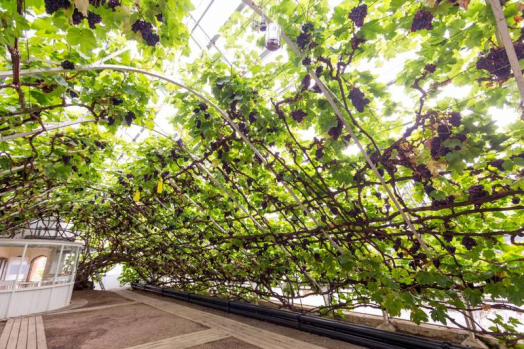
But did you know that the Hampton Court Vine was itself planted from a cutting taken in 1768 from the vine that had been planted here at Valentines in 1758?
The vine was planted at Valentines by Charles Raymond’s gardener, Mr Eden . An enormous hot-house accommodated the vine, which extended two hundred feet, part of it running along the fourth wall on the outside of the hot-house. All accounts mention that the vine at Valentines bore a great deal of fruit, about 200 kg a year, producing a decent income for Sir Charles Raymond, income which went to the gardener after Sir Charles left Valentines on the death of his wife in 1778; the stem of the vine was, by 1796, fourteen inches in girth.
Read on to discover the full story of what eventually happened to the original vine at Valentines!
THE DRY GARDEN
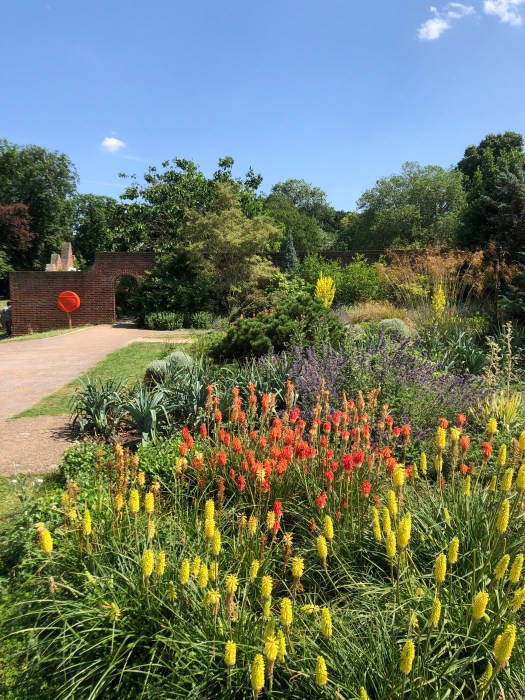
The Dry Garden was made to commemorate Queen Elizabeth II’s Diamond Jubilee . It was officially opened by the late Queen on Thursday 29 March 2012 . It was the first major planting in the pleasure garden at Valentines for a century.
THE VALENTINES OWL
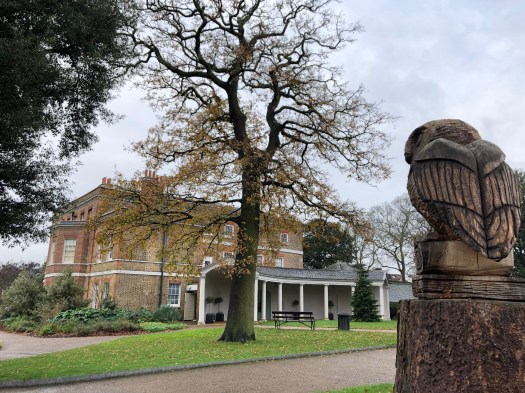
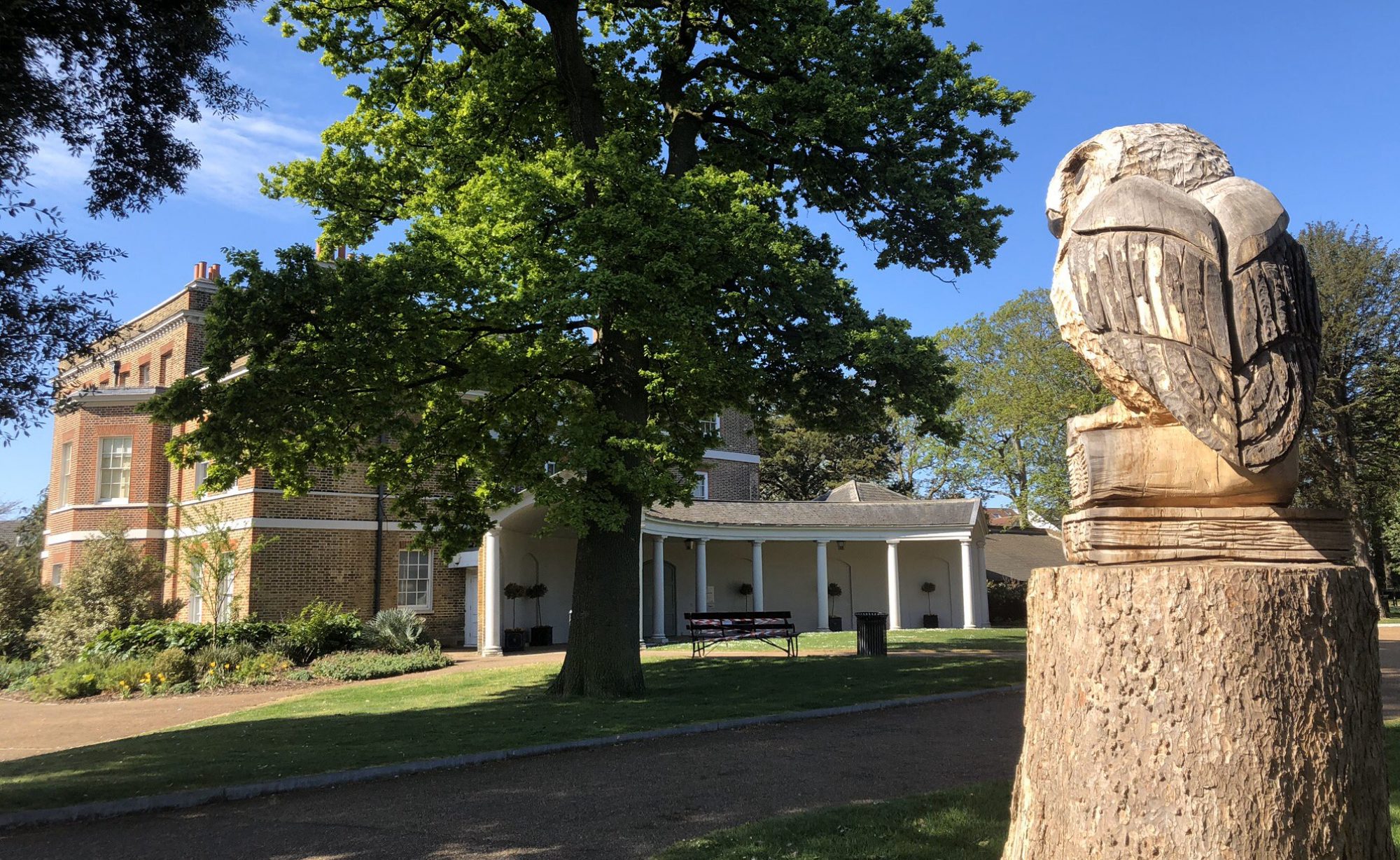
In May 2019 Valentines had a new resident in its gardens. Well, first it was just a rather tall tree stump, which several of us thought was a (sadly) dead tree, being dealt with gradually by the tree surgeons so as to protect the walls of the Historic Gardens; then one day a man with a van and a chainsaw appeared to work his magic… and slowly over a period of a few days the unmistakable shape of Owl emerged, perching on top of two large tomes.
The Owl kept its beady eye on the mansion and Porte Cochère for many years but in December 2025 it “flew away” from its perch nature having taken its toll.
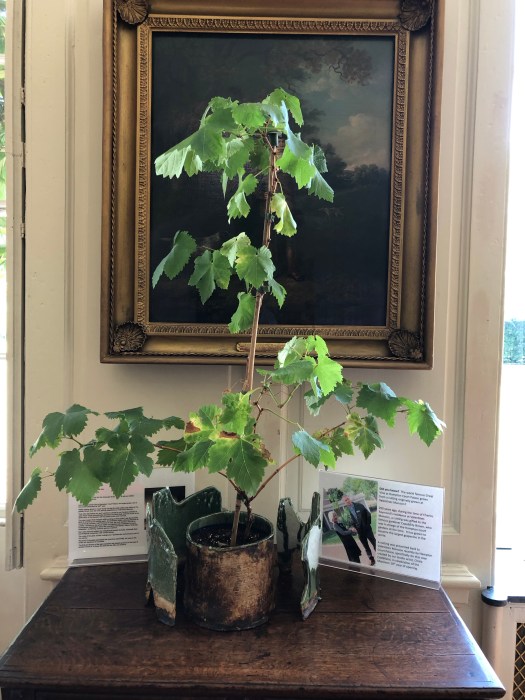
Read more about Owl and the historic sycamore trees here.
 Friends Of Valentines Mansion